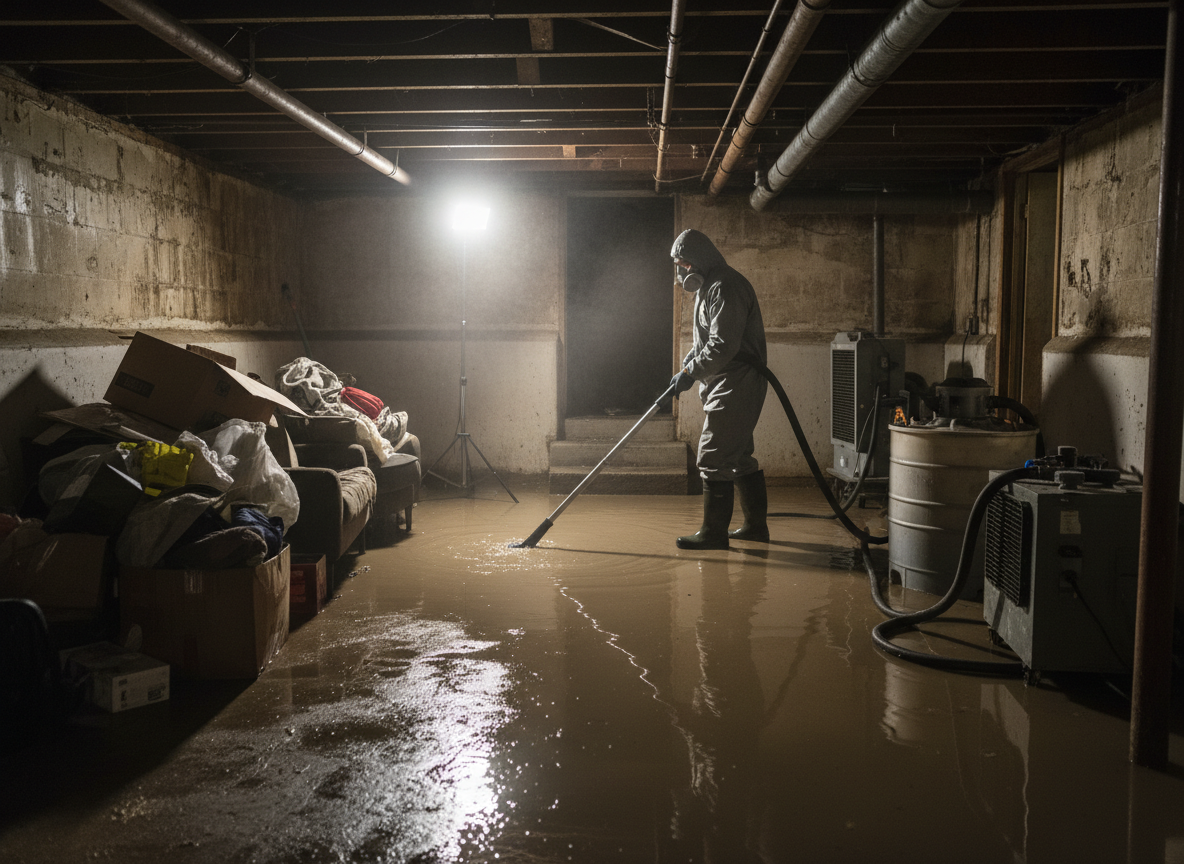
Whitewater sits in a hot desert climate where sudden monsoon rains can send water down from the surrounding hills into lower-lying homes along Dillon Road and nearby stretches toward Banning. Basements here are uncommon but appear in a handful of older hillside properties built before modern grading standards. When water enters, it often carries fine desert silt that clings to concrete and framing, requiring thorough removal before any drying equipment can work effectively.
We extract standing water with submersible pumps rated for heavy sediment loads, then remove saturated drywall, carpet, and insulation to prevent hidden mold growth in the dry heat that follows. Because summer temperatures routinely exceed 110 degrees, we run air movers and dehumidifiers on a tight schedule to avoid over-drying one area while another stays damp. Homes near Palm Springs often share similar construction details, so we apply the same sequence of moisture mapping and targeted demolition used on those jobs.
Riverside County code requires proper disposal of flood-damaged materials and documentation of moisture levels before reconstruction begins. We photograph every step and provide the paperwork homeowners need for insurance claims. Edge cases include water that travels under slab foundations from irrigation ditches common in the Whitewater area; these require perimeter trenching and extended drying that standard above-grade methods miss.
Technician insight
In Whitewater, the thing that catches most people out with Basement flood cleanup is how fast monsoon silt dries into a concrete-like crust once the 110-degree heat hits. Homeowners try to mop it themselves and end up sealing moisture under the floor; we have to jackhammer the top layer on more jobs than you'd think because of that.
Monsoon runoff into Dillon Road basement
Heavy rain funneled water under a home's garage slab near 60735 Dillon Rd. We found standing water mixed with fine desert silt reaching the finished basement walls. Extraction and targeted slab drying prevented mold, and the homeowner returned to a dry, documented space within five days.
How it works
- 1
Emergency Assessment
Arrive within hours, locate the water source, and measure moisture in walls and floors using thermal imaging.
- 2
Water Extraction
Pump out standing water and remove silt-laden debris that desert storms deposit in basements.
- 3
Drying and Monitoring
Place commercial drying equipment and check moisture readings daily until levels return to normal.
- 4
Sanitization and Documentation
Apply antimicrobial treatment and compile photos and readings for insurance submission.
Pricing
Cost depends on water volume, depth of silt, and whether slab or foundation drying is required.