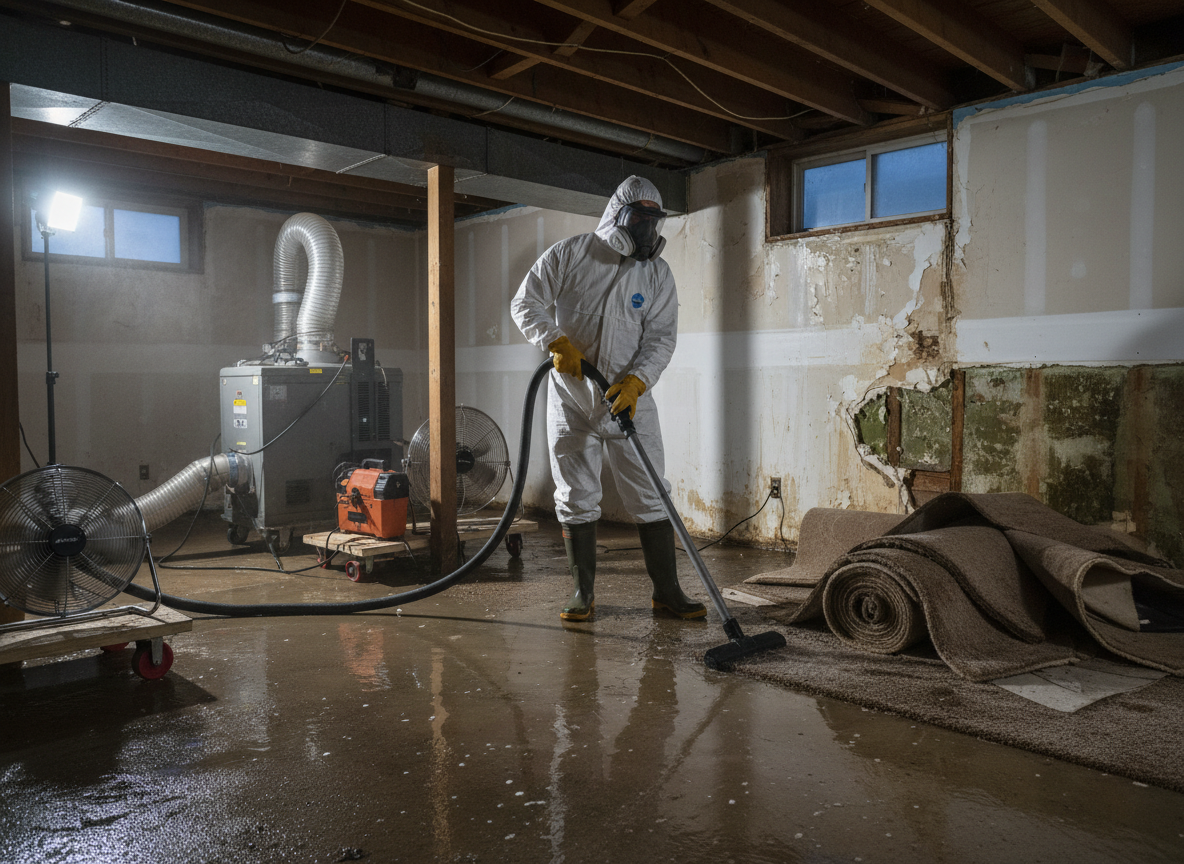
Whitewater sits in the San Gorgonio Pass where summer monsoons send sudden runoff down the alluvial fans and across Dillon Road properties. When water enters a home here the extreme daytime heat above 110 degrees quickly turns standing water into a mold incubator inside stucco and older frame construction common along the canyon floors. Technicians must pull baseboards and drill weep holes within hours or the gypsum board behind kitchen cabinets will delaminate before the next morning.
Many homes in Whitewater and the surrounding Banning bench were built before modern slab waterproofing standards. Floodwater travels under the slab through the gravel base and reappears days later in adjacent rooms. Restoration crews use moisture meters on both sides of shared walls and often remove sections of the slab edge to confirm the vapor barrier is intact before closing the structure.
Palm Springs and Banning properties share the same alluvial soil that holds water against foundations for weeks. After a flood event the crew sets up high-velocity air movers angled at the stem walls and runs dehumidifiers at 55 grains per pound until readings drop below 12 percent. Skipping this step in desert heat allows efflorescence to appear on stucco within a month.
Insurance adjusters in Riverside County require photo documentation of every removed section and daily moisture logs. The crew timestamps each reading at the same locations so the claim file shows the drying curve rather than a single final number.
Technician insight
In Whitewater, the thing that catches most people out with Flood restoration services is how fast the 110-degree heat drives moisture behind the stucco on pre-1980 homes along Dillon Road. If you do not pull the weep holes the same afternoon the water stops, the paper facing on the gypsum starts feeding mold before sunrise.
Monsoon Runoff into Canyon Home
Flash flood from a summer storm sent water under the slab of a 1970s stucco house off Whitewater Canyon Road. We found saturated gravel base extending under two bedrooms. After extracting water we drilled weep holes along the perimeter, ran drying equipment for four days, and confirmed readings below 12 percent before replacing baseboards.
How it works
- 1
Emergency Assessment
Arrive on site, locate entry points, and map water migration through slab and walls using meters.
- 2
Water Extraction
Remove standing water with truck-mounted pumps and extract from carpet pads and subfloors before heat sets in.
- 3
Structural Drying
Place air movers and dehumidifiers, then monitor readings twice daily until moisture levels stabilize.
- 4
Sanitizing and Restoration
Apply antimicrobial to affected cavities, replace damaged drywall, and return the home to pre-loss condition.
Pricing
Upfront quote after inspection; cost driven by water volume, affected square footage, and number of days equipment must run.