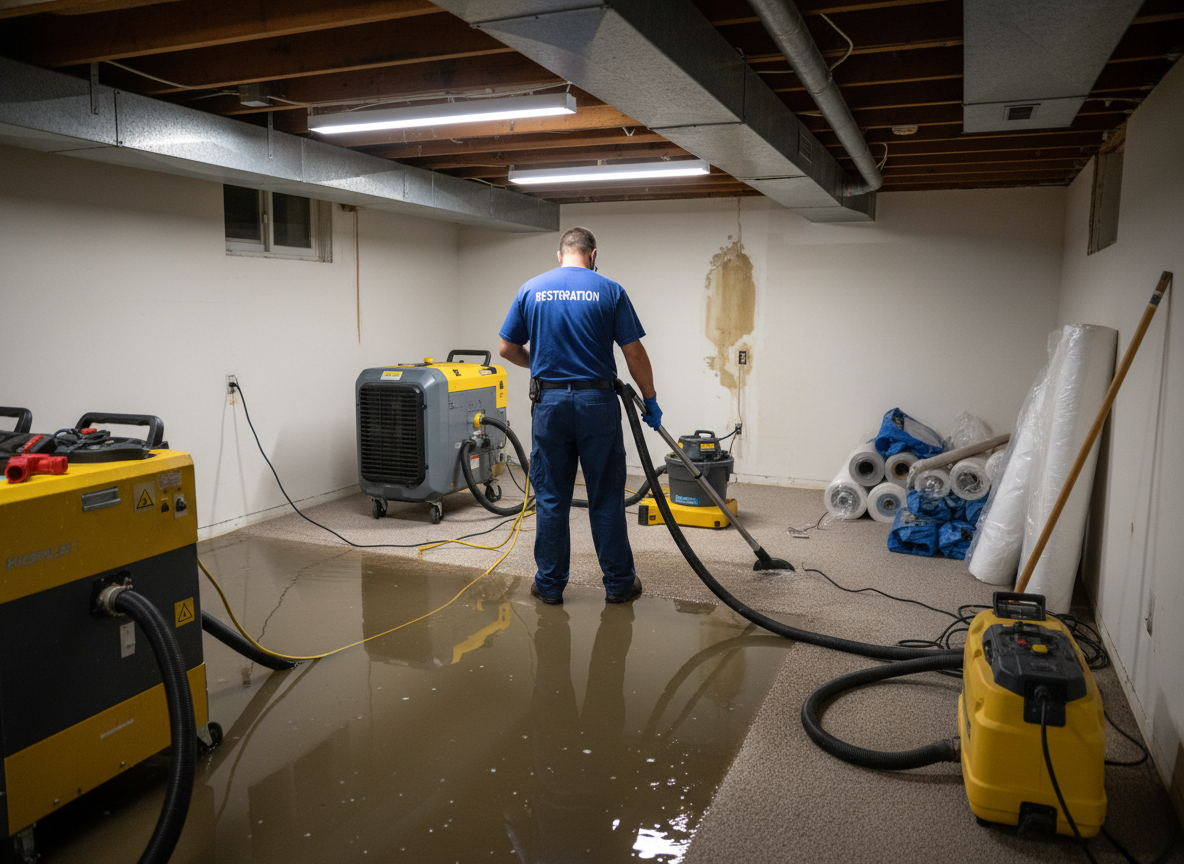
Whitewater sits in a hot desert climate where summer temperatures routinely exceed 110 degrees, so even a small pinhole leak in copper or galvanized lines can drive moisture deep into stucco walls and under slab foundations before residents notice. Homes here range from 1960s and 1970s builds along Dillon Road to newer infill near the Whitewater Preserve; both stock types share the same risk of pipe corrosion accelerated by mineral-heavy well water common in Riverside County. Technicians must account for rapid surface drying that masks still-wet cavities, requiring moisture meters and infrared scans rather than visual checks alone.
When a leak reaches drywall, insulation, or subfloor, the extreme heat shortens the safe window before microbial growth begins. Restoration crews pull baseboards, create negative-pressure drying chambers, and use low-grain refrigerant dehumidifiers sized for desert airflow rather than standard residential units. In neighborhoods bordering Banning Pass, wind-driven dust can infiltrate open cavities during repairs, so containment and HEPA filtration stay on-site the entire job. Slab leaks common on older properties require concrete scanning before any jackhammer work to avoid buried electrical or gas lines.
After extraction and drying, affected materials are compared against current California building codes for vapor barriers and insulation R-values, especially in single-story ranches prevalent along Highway 111. Homeowners often see staining reappear weeks later if the leak source was never isolated; therefore every job includes a final pressure test on supply lines and documentation of moisture readings below 12 percent. Work performed from the 60735 Dillon Rd shop allows same-day mobilization across Whitewater and into Palm Springs foothills without long travel delays.
Technician insight
In Whitewater, the thing that catches most people out with water leak restoration is how the extreme summer heat dries the visible surface in hours while moisture stays trapped behind stucco or under the slab, especially in 1970s homes along Dillon Road where mineral scale hides pinhole leaks until they flood the crawlspace.
Slab Leak Under 1970s Whitewater Home
A resident near the Whitewater Preserve reported warm floors and rising utility bills. We located a corroded supply line under the slab, extracted water that had wicked into the subfloor, and dried the structure with targeted equipment before mold could form in the desert heat. The line was rerouted above grade and the concrete was patched to match the original finish.
How it works
- 1
On-Site Assessment
Technician arrives 24/7, maps moisture with meters and thermal imaging, and traces the leak source without demolition.
- 2
Water Extraction
Standing water is removed using portable pumps suited for low-clearance desert homes, followed by containment setup.
- 3
Structural Drying
Industrial dehumidifiers and air movers run until readings drop below 12 percent, with daily monitoring logs.
- 4
Material Restoration
Damaged drywall, insulation, and flooring are replaced or repaired, then finishes are matched to existing surfaces.
Pricing
Cost depends on leak location, square footage affected, and whether slab or wall access is required; upfront written quotes provided on site.