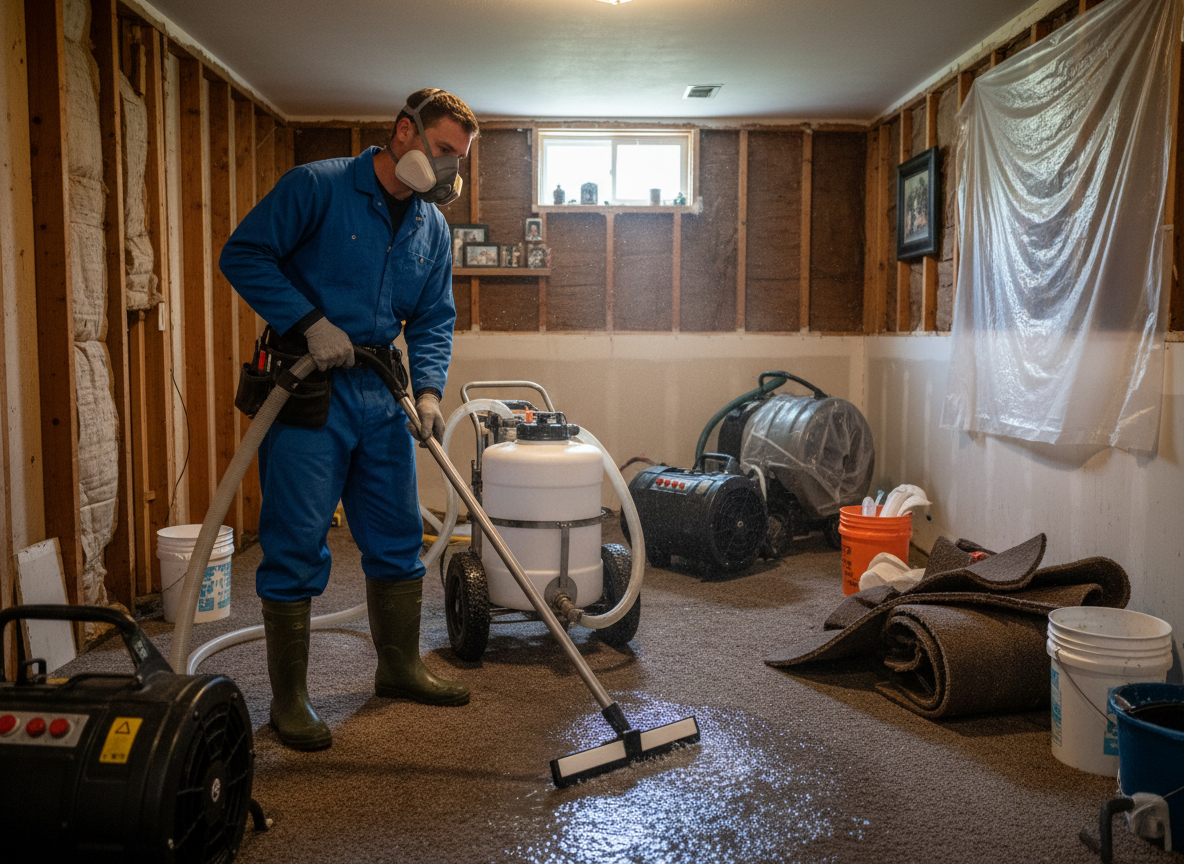
Whitewater sits in the hot desert climate of Riverside County where summer temperatures routinely exceed 110 degrees. Surface water evaporates fast but moisture often stays trapped beneath stucco exteriors and slab foundations common in homes built along Dillon Road and toward Banning. Mitigation crews must map hidden saturation with thermal imaging before extraction because rapid surface drying hides the real extent of damage. Failure to address sub-slab moisture leads to recurring issues once cooler nights return.
Local terrain channels monsoon runoff from the San Gorgonio Pass directly into lower Whitewater neighborhoods. Older housing stock frequently lacks modern vapor barriers so water migrates under flooring and into wall cavities faster than in newer Palm Springs builds. Technicians extract standing water then deploy low-grain dehumidifiers calibrated for desert air to pull residual moisture without over-drying wood framing. This sequence prevents the salt crystallization that desert soils leave behind in porous materials.
Mitigation stops secondary damage only when crews document every step for Riverside County permitting requirements. Homes near the 60735 Dillon Road corridor often sit on compacted desert soil that holds water against foundation walls longer than expected. Technicians remove saturated insulation and baseboards first then monitor moisture levels daily until readings match unaffected areas. Skipping this verification leaves hidden pockets that later require full demolition.
Technician insight
In Whitewater, the thing that catches most people out with Water damage mitigation is how extreme summer heat dries the top layer of stucco and concrete while leaving moisture trapped against the slab in older homes between here and Banning. Homeowners see a dry floor and assume the job is done, but we still have to pull baseboards and run dehumidifiers for days because the desert soil holds water against the foundation.
Crawlspace Saturation After Monsoon Runoff
Heavy rain funneled water under a home near Dillon Road. We found standing water and saturated insulation in the crawlspace. Extraction and targeted drying equipment were placed immediately. Daily checks confirmed moisture returned to normal levels without mold growth.
How it works
- 1
Site Assessment
Technicians inspect all affected rooms and use moisture meters on walls, floors, and ceilings to locate hidden water.
- 2
Water Extraction
Standing water is removed with truck-mounted pumps and portable extractors suited for desert debris loads.
- 3
Drying and Dehumidification
Industrial air movers and dehumidifiers run continuously while crews adjust placement for extreme daytime heat.
- 4
Final Verification
Moisture readings are rechecked until levels match pre-loss conditions and documentation is prepared for insurance.
Pricing
Pricing varies by square footage affected, depth of saturation, and whether access to crawlspaces or slabs is required.