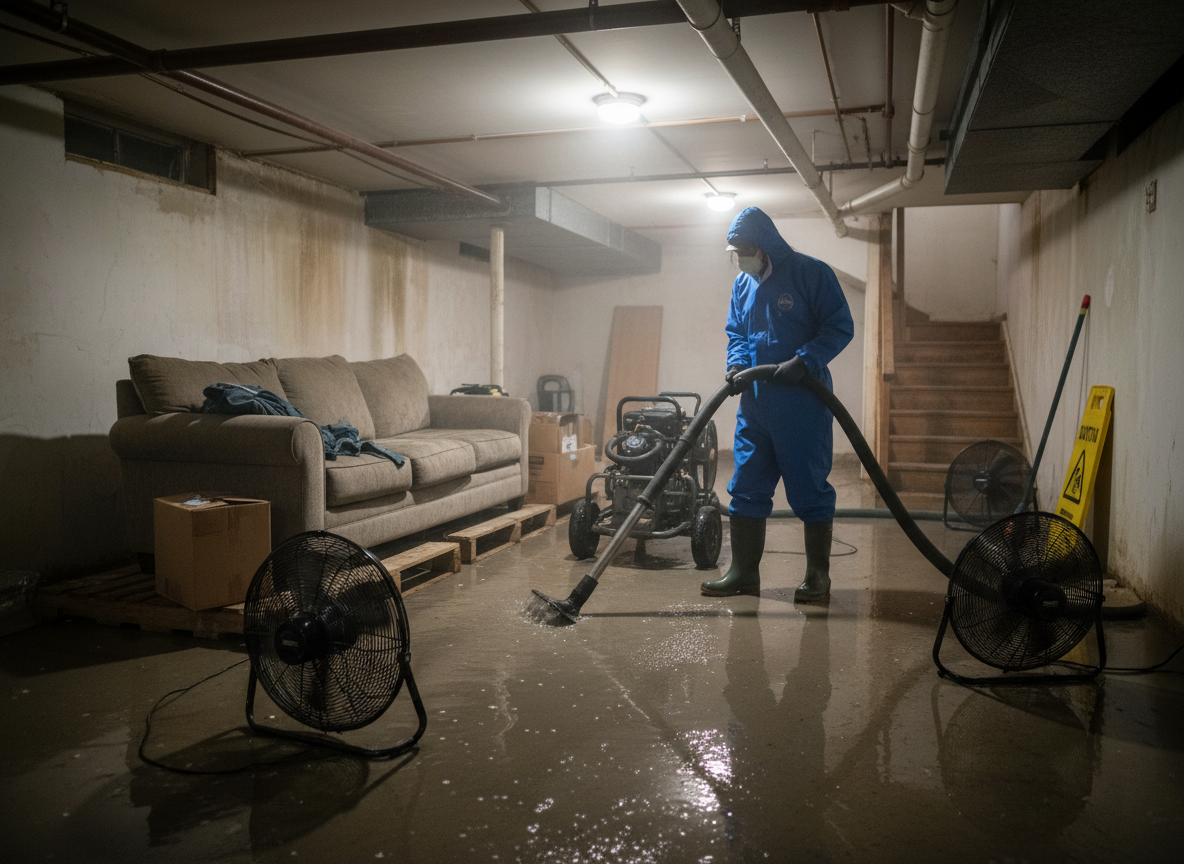
Whitewater sits in a hot desert climate where summer temperatures routinely exceed 110 degrees, speeding surface evaporation yet trapping moisture inside older stucco and wood-frame homes common along Dillon Road and the surrounding alluvial fans. Emergency water cleanup here starts with locating hidden water that has wicked into slab edges or behind drywall because the sandy soil drains fast but leaves damp pockets that feed mold within 48 hours. Crews arriving from our base at 60735 Dillon Rd use moisture meters and thermal imaging to map migration paths that often run toward Banning or Palm Springs due to the slight grade toward the valley floor.
Flash flooding from the San Bernardino Mountains can send sheets of water across properties in minutes, saturating crawl spaces and irrigation lines that older Whitewater homes rely on. The extreme heat accelerates drying once extraction begins, but it also creates a false sense of security when humidity spikes inside enclosed garages or utility rooms. Technicians must pull carpet pads and baseboards immediately because the combination of heat and trapped moisture warps particleboard cabinets and promotes mildew on drywall paper facing before visible signs appear.
In Riverside County, local building practices often include slab-on-grade construction with minimal vapor barriers, so water from a supply line break travels under tile and into adjacent rooms faster than in cooler climates. Emergency water cleanup requires negative air machines to control dust and spores while dehumidifiers run continuously, especially when monsoon remnants hit in late summer. Failing to address the soil saturation around foundations near the Whitewater River channel can lead to recurring efflorescence on walls months later.
Technician insight
In Whitewater, the thing that catches most people out with Emergency water cleanup is how the extreme summer heat dries the top of the slab fast while water stays trapped under tile or in the sandy soil around older foundations, so you have to keep meters on the job for days instead of assuming it is done when the floor feels dry.
Washing Machine Leak in Whitewater Home
A supply line burst behind a laundry wall sent water across the slab and into the adjacent hallway. We found moisture had traveled under the tile into two bedrooms because the home sits on the typical Whitewater alluvial soil that lets water spread before it drains. Extraction and targeted drying with equipment placed along the foundation stopped further migration toward the garage. The home was returned to normal moisture levels within four days without mold growth.
How it works
- 1
Arrival and Safety Assessment
Technician reaches the site from the Dillon Road location, shuts off water source, and checks for electrical hazards before entering.
- 2
Water Extraction
Industrial pumps and wands remove standing water from floors, carpets, and hard surfaces while documenting affected materials.
- 3
Moisture Mapping
Thermal cameras and meters locate hidden moisture in walls, subfloors, and soil around the foundation typical in Whitewater builds.
- 4
Drying and Monitoring
Air movers and dehumidifiers run until readings return to normal, with daily checks to prevent mold in the desert heat.
Pricing
Pricing varies by water volume, materials affected, and drying time; we provide an upfront quote after inspection.