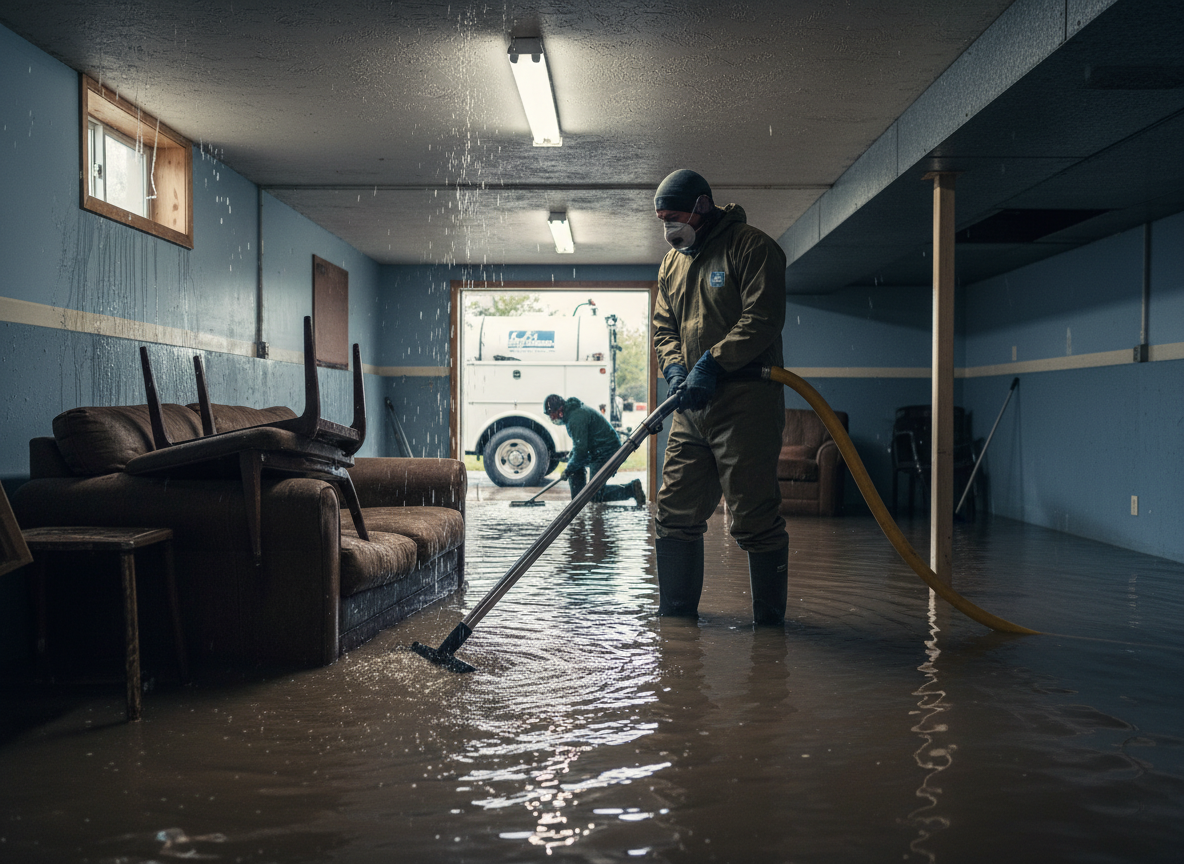
Whitewater sits in a hot desert climate where summer temperatures often exceed 110 degrees, so standing water from a burst line or flash flood evaporates from surfaces quickly yet leaves hidden moisture trapped in stucco, slab foundations, and older crawl spaces common along Dillon Road and nearby routes toward Banning. Emergency water removal crews use truck-mounted pumps and moisture meters to pull water before it migrates into wall cavities or under tile, preventing the rapid mold bloom that desert heat and low humidity can accelerate once the visible puddle disappears. Homes built decades ago near the Whitewater River wash often lack modern vapor barriers, so technicians must check behind baseboards and under carpet padding the same day to avoid structural rot that shows up months later during the cooler winter rains.
When a main line breaks in a single-wide on the outskirts of Whitewater or a roof leak hits a Palm Springs vacation rental, the first priority is stopping active flow and extracting standing water before it reaches electrical boxes or HVAC returns. Portable extractors and weighted squeegees handle the initial removal on concrete slabs typical in Riverside County construction, while air movers and dehumidifiers follow to drive moisture out of drywall that has already absorbed water up to the two-foot mark. Technicians also inspect adjoining rooms because desert wind can push water under door thresholds into adjacent units faster than in coastal areas.
After extraction, crews document moisture readings at multiple depths in flooring and walls, then set up drying zones that account for the extreme temperature swings between day and night in Whitewater. This prevents warping in older hardwood or laminate installed in homes built before current energy codes. Leaving even small pockets of moisture near the foundation can lead to recurring issues when monsoon moisture arrives from the San Gorgonio Pass, so follow-up visits confirm levels stay below 15 percent before any reconstruction begins.
Technician insight
In Whitewater, the thing that catches most people out with Emergency water removal is how the extreme summer heat dries the top of a slab fast while water stays trapped under tile or in the gravel base, so you have to pull baseboards the first day or the moisture just migrates into the next room when the temperature drops at night.
Pipe Burst Under Slab Near Dillon Road
A main supply line failed under the concrete of a 1970s home on the west side of Whitewater. Water had already wicked into the living-room drywall and traveled under the hallway tile toward the bedrooms. Crews extracted standing water, cut affected baseboards, and ran drying equipment for four days while checking readings in the adjoining bathroom. The home passed final moisture tests with no mold growth and was ready for new flooring within a week.
How it works
- 1
Site Assessment
Technicians arrive within the hour, locate the water source, and map affected rooms using moisture meters calibrated for desert construction materials.
- 2
Water Extraction
Truck-mounted and portable pumps remove standing water from slabs, carpets, and low-lying areas common in Whitewater properties.
- 3
Drying and Monitoring
Industrial air movers and dehumidifiers run in targeted zones while daily readings track moisture reduction in walls and floors.
- 4
Final Verification
Return visits confirm all readings meet industry dry standards before any rebuilding or occupant re-entry.
Pricing
Pricing depends on water volume, affected square footage, and drying duration; upfront quotes provided on site before work begins.