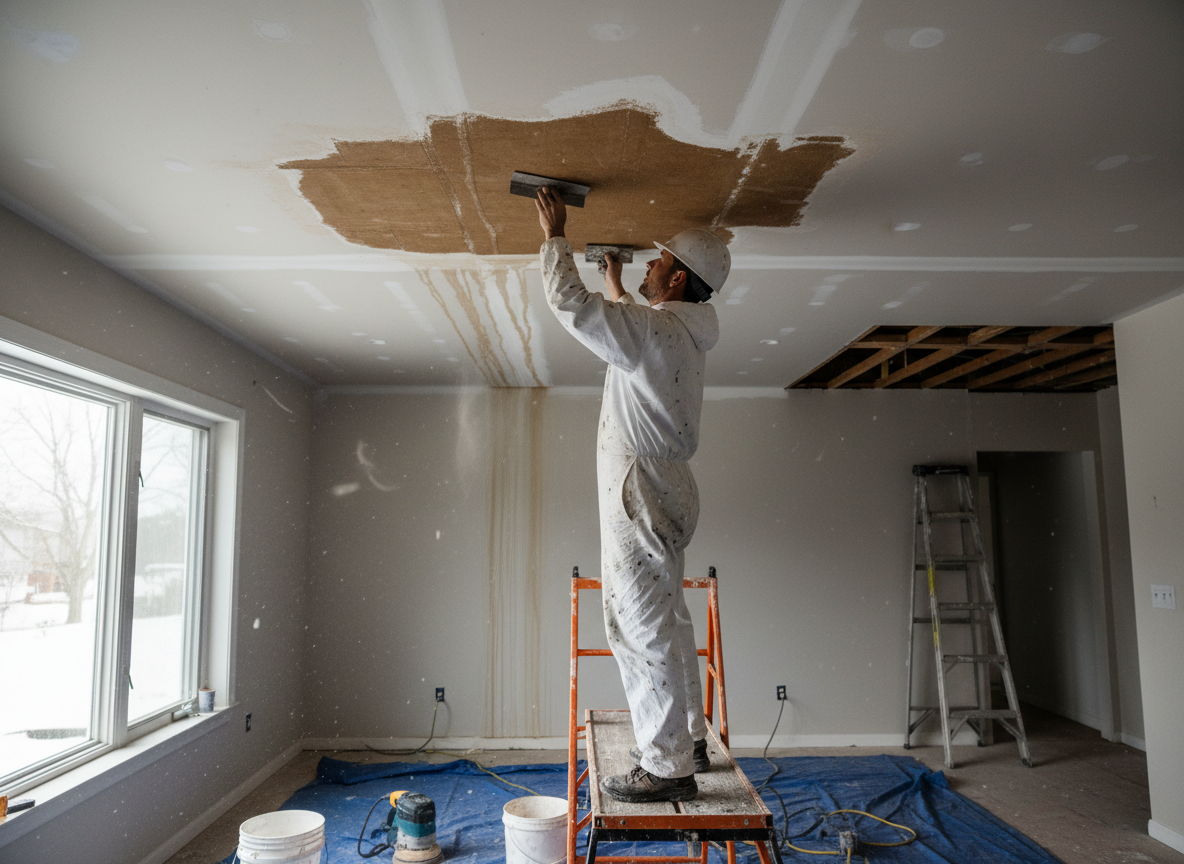
Whitewater sits in Riverside County’s hot desert zone where summer temperatures routinely push past 110 degrees, driving rapid evaporation that hides moisture behind ceilings while accelerating mold in older stucco and wood-frame homes common along Dillon Road and toward Banning. Ceiling repairs here often involve removing saturated drywall or plaster that has pulled away from rafters, then drying the cavity with targeted airflow before installing new moisture-resistant board and matching texture. Flat or low-slope roofs prevalent in the area trap heat and can send water along joists for surprising distances, so technicians must trace leaks back to their source rather than patching only the visible sag.
Edge cases include stucco ceilings in homes built before the 1980s that contain metal lath; once water reaches the lath it corrodes quickly in the alkaline desert soil dust that infiltrates attics. Technicians also watch for HVAC condensate lines that fail during peak cooling loads, sending steady drips onto popcorn ceilings that then delaminate in sheets. Proper repair includes treating affected wood members with borate solutions to prevent dry-rot that thrives once monsoon moisture arrives later in the season.
Code considerations in unincorporated Whitewater require permits when structural ceiling members are replaced; skipping this step can complicate future insurance claims or resale. After drying, crews install new insulation matching the existing R-value so the repaired section does not create a thermal bridge that shows as a cold spot during winter evenings when temperatures drop sharply.
Technician insight
In Whitewater, the thing that catches most people out with Ceiling water damage repair is how quickly extreme summer heat dries the visible surface while trapping moisture against the roof deck above, especially in homes near the 10 freeway where dust infiltration makes mold hard to spot until it spreads.
AC Condensate Leak on Dillon Road
A Whitewater homeowner noticed a brown water ring on the living-room ceiling during a week of 115-degree days. Inspection found a clogged condensate line from the attic unit dripping onto insulation. Crews removed the wet section, dried the joist cavity, treated the wood, and reinstalled matching drywall and texture so the ceiling blended with the rest of the room.
How it works
- 1
Inspection and Moisture Mapping
Technicians use infrared cameras and moisture meters to trace the full extent of water migration through ceilings in Whitewater homes.
- 2
Water Source Stoppage
Identify and stop the leak, whether from roof, plumbing, or AC condensate, before any drying begins.
- 3
Drying and Containment
Set up containment and drying equipment sized for desert heat loads to remove hidden moisture without spreading dust.
- 4
Repair and Finish
Replace damaged materials, match texture, and repaint to blend with the original ceiling.
Pricing
Cost depends on square footage affected, whether structural members need treatment, and access difficulty in attic spaces common to Whitewater homes.