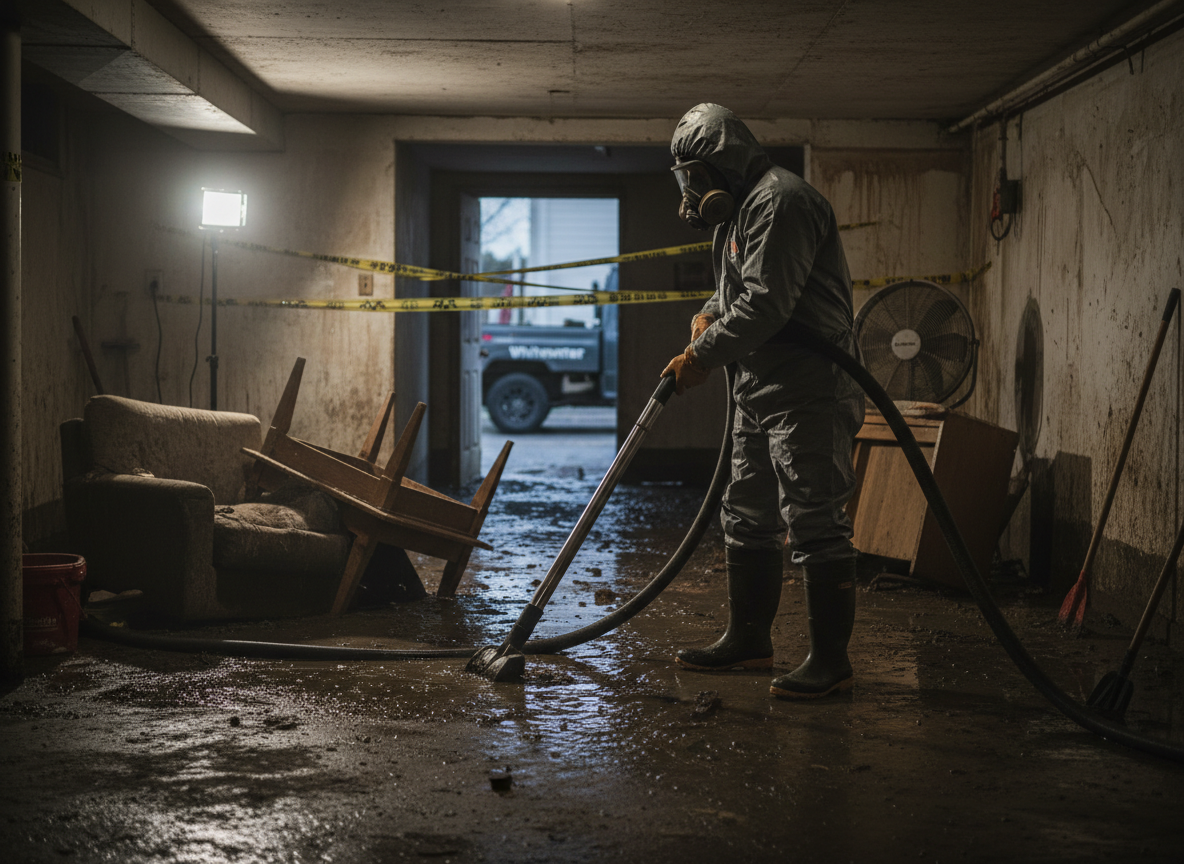
Sewage backups in Whitewater often stem from aging septic systems or municipal lines strained by extreme summer heat that accelerates bacterial growth and odor spread. Desert soils here drain poorly in some pockets near Dillon Road, allowing contaminated water to linger under slabs or in crawl spaces common to 1970s-1990s builds. Technicians must extract standing waste first, then apply antimicrobial treatments rated for porous materials like drywall and subflooring that absorb quickly in low-humidity air once dried. Failure to address hidden moisture pockets leads to mold within days when temperatures exceed 100 degrees.
Code requirements in Riverside County mandate proper disposal of biohazard waste at approved facilities, and crews follow strict PPE protocols to prevent cross-contamination during transport from Whitewater properties. Edge cases include overflows reaching irrigation ditches that feed into the Whitewater River wash, requiring coordination with local flood control to avoid wider environmental impact. Homeowners frequently overlook carpet padding and insulation behind appliances, where sewage migrates along concrete foundations typical in the area.
Hot desert conditions dry surface water fast but trap humidity inside wall cavities, demanding moisture meters and thermal imaging before any reconstruction begins. We separate salvageable contents from contaminated debris on-site, documenting everything for insurance adjusters who handle claims from Palm Springs to Banning corridors.
Ventilation and dehumidification run continuously because residual odors return quickly if humidity spikes during monsoon season. All work stops only after third-party clearance testing confirms safe levels.
Technician insight
In Whitewater, the thing that catches most people out with sewage cleanup is how fast the desert heat drives odors through shared walls in older tract homes near Banning Pass. Homeowners try DIY fans and miss the moisture trapped under the slab because the soil here holds it longer than they expect.
Septic Line Failure Near Dillon Road
A Whitewater residence experienced a septic overflow after heavy monsoon rain overwhelmed the tank. We found waste had migrated under the garage slab and into insulation. Extraction and targeted disinfection removed the contamination, followed by drying that prevented mold in the 110-degree heat. The home passed clearance testing and was returned to use without further issues.
How it works
- 1
Assessment And Containment
Technicians arrive, identify the source, and set up barriers to prevent spread through the home or into yards common along Dillon Road.
- 2
Extraction And Removal
Standing sewage and affected materials are removed using pumps and HEPA vacuums suited for desert dust and sand infiltration.
- 3
Cleaning And Disinfection
Surfaces receive EPA-registered antimicrobials, with special attention to porous materials that hold moisture in extreme heat.
- 4
Drying And Verification
Equipment dries the structure while meters confirm moisture levels; final clearance testing ensures the property meets safety standards before rebuild.
Pricing
Cost depends on volume, affected square footage, and whether septic or municipal lines are involved; upfront assessment provided on arrival.