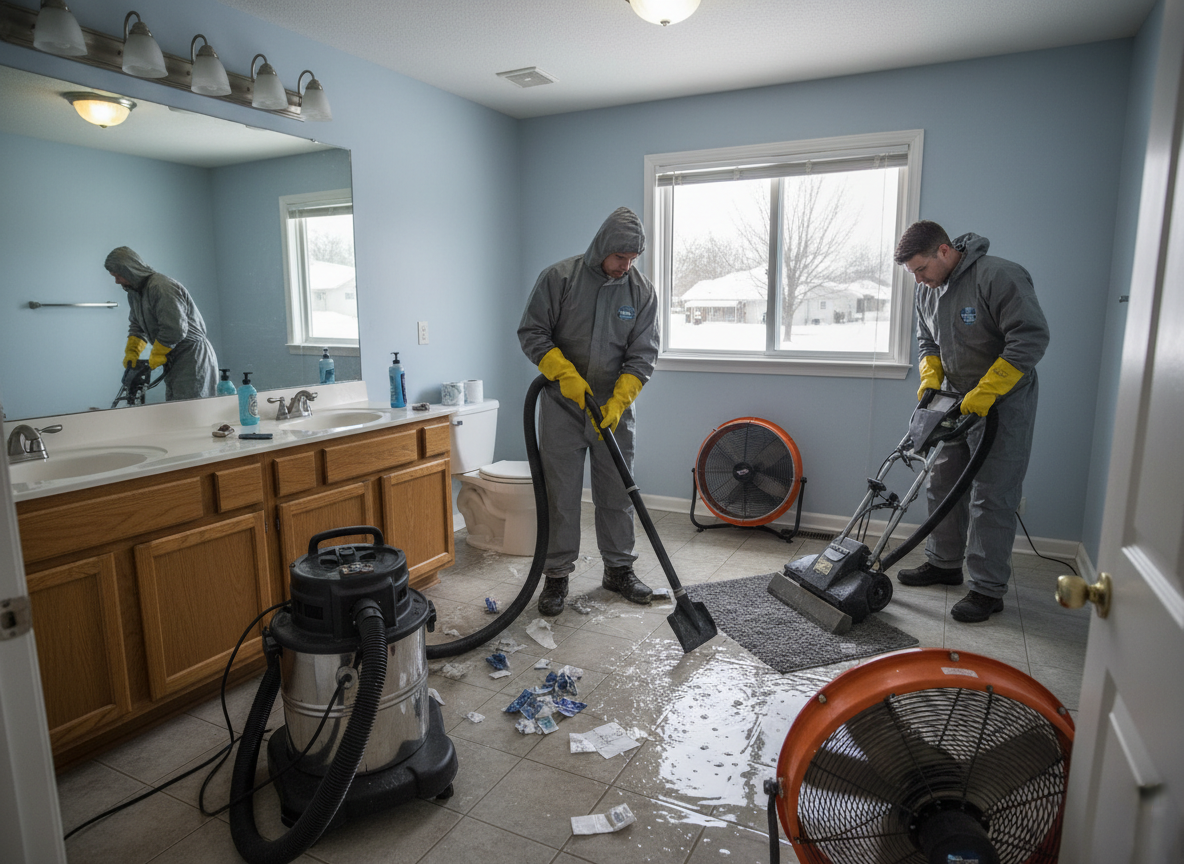
Toilet overflows in Whitewater often involve black water that saturates vinyl, tile grout and the particleboard underlayment common in 1970s-1990s homes along Dillon Road and Highway 111. Because the desert heat can exceed 110 degrees, surface water evaporates within hours, leaving trapped moisture beneath cabinets and along slab edges that later feeds mold. Technicians must pull baseboards, use moisture meters on concrete, and run air movers pointed at the wall cavities rather than just the floor to prevent hidden growth that shows up weeks later during monsoon humidity spikes.
Extraction begins with a submersible pump to remove standing water, followed by wet vacuums that reach under toilets and into the wax ring area where sewage can wick into the subfloor. In Riverside County, older septic systems near Banning can back up into the line during heavy rains, so crews test for cross-contamination before any drying equipment is placed. Antimicrobial fogging follows only after all porous material is removed or treated, and dehumidifiers sized for desert conditions run until readings drop below 15 percent moisture content on the slab.
Homeowners sometimes attempt their own cleanup with shop vacs and fans, but this leaves bacteria in the grout lines and under the toilet flange, creating odors that travel through the slab penetrations typical in Whitewater tract homes. Professional crews document every step with photos for insurance adjusters and dispose of contaminated materials at approved Riverside County facilities rather than household trash.
After the visible water is gone, infrared cameras locate remaining damp pockets behind vanities or in the wall shared with the shower. Final clearance testing confirms the space is dry before any reconstruction begins, protecting against repeat claims during the next summer heat wave.
Technician insight
In Whitewater, the thing that catches most people out with Toilet overflow cleanup is how the extreme summer heat dries the visible floor in a day while moisture stays trapped against the slab in homes built before vapor barriers were standard in Riverside County.
Overflow Behind Vanity in Whitewater Home
A homeowner on Dillon Road discovered water seeping from under the bathroom vanity after a toilet flange failed. Extraction revealed saturation under the particleboard subfloor extending into the hallway. Crews removed the affected underlayment, dried the slab for four days, and applied antimicrobial treatment before reinstalling baseboards.
How it works
- 1
Initial Assessment
Technician arrives within hours, identifies water category, maps affected rooms, and checks for hidden moisture in slabs and wall cavities common in Whitewater homes.
- 2
Water Extraction
Standing water is pumped and vacuumed, including under the toilet flange and into subfloor areas before desert heat locks moisture in place.
- 3
Drying and Dehumidification
Air movers and commercial dehumidifiers run continuously, with daily moisture readings taken on concrete and wood to reach safe levels.
- 4
Sanitization and Clearance
Antimicrobial treatment is applied, contaminated materials removed, and the space tested before homeowners return.
Pricing
Pricing varies by square footage affected, depth of saturation into subfloor, and whether septic cross-contamination is present.