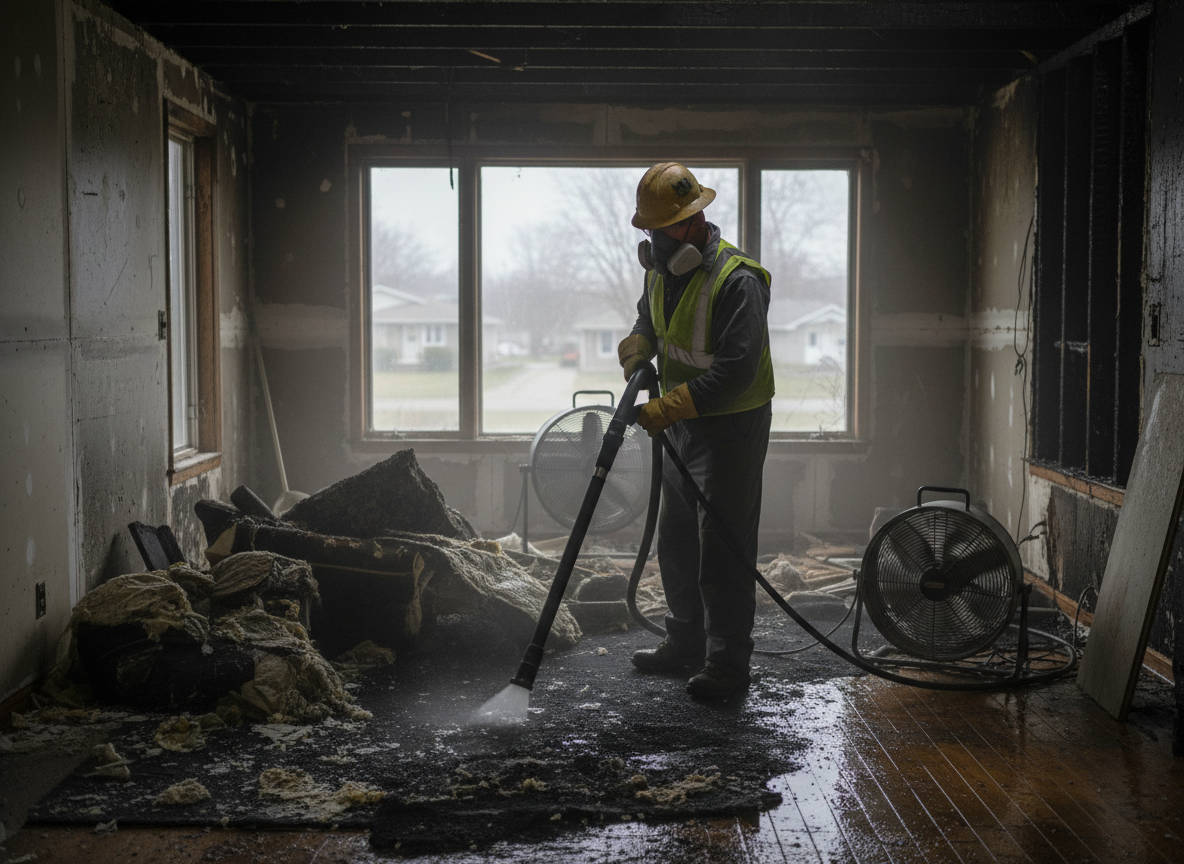
Whitewater homes often feature older stucco and wood-frame construction that lets smoke and soot travel through attics and wall cavities during structure fires. Firefighting water quickly evaporates in the extreme summer heat yet leaves behind mineral deposits and hidden moisture that can damage drywall and insulation. Technicians must remove charred materials, clean porous surfaces with specialized agents, and monitor moisture levels because rapid temperature swings between day and night can cause hidden pockets to re-wet.
Riverside County building codes require proper disposal of contaminated debris and documentation of drying standards before any reconstruction begins. In neighborhoods around Dillon Road and near Banning, flash flood channels and sandy soil can carry runoff from fire sites into crawl spaces, complicating extraction. Crews use air movers and dehumidifiers calibrated for low-humidity desert air to prevent secondary mold growth that thrives once temperatures drop after sunset.
Nearby Palm Springs properties share similar desert exposure, but Whitewater’s higher elevation brings occasional monsoon moisture that mixes with soot to create acidic residues on metal fixtures and electrical boxes. Remediation includes HEPA vacuuming, odor neutralization with vapor systems, and thermal imaging to locate residual water behind tile and concrete slabs common in local builds. Skipping these steps often leads to recurring odors or failed insurance inspections.
Seasonal Considerations
Hot desert summers accelerate surface drying yet trap moisture inside thick adobe-style walls found on some Whitewater properties. Winter brings cooler nights that slow evaporation, requiring extended equipment runtime to meet industry drying goals.
Technician insight
In Whitewater the thing that catches most people out with water damage remediation after fire is how fast the extreme summer heat dries the surface while leaving moisture trapped behind stucco and in sandy crawl spaces along Dillon Road. Homeowners often start repairs too soon and miss the hidden pockets that later cause mold when monsoon humidity hits.
Fire Suppression Water in Whitewater Residence
A structure fire near Banning left several inches of water in a Whitewater home’s crawl space. Inspection revealed soot penetration through HVAC ducts and moisture behind older drywall. Crews extracted the water, cleaned residue, ran drying equipment for four days, and verified clearance before reconstruction.
How it works
- 1
Initial Assessment
Technicians arrive 24/7 at the Whitewater site, document visible water, soot and structural impact, then use moisture meters and thermal cameras to map hidden damage.
- 2
Containment and Safety
Plastic barriers isolate affected rooms while crews remove standing water and secure electrical hazards before deeper cleaning begins.
- 3
Cleaning and Extraction
Soot and residue are removed from surfaces, followed by water extraction from carpets, drywall and subfloors using truck-mounted equipment suited to desert terrain.
- 4
Drying and Monitoring
Industrial drying equipment runs until readings meet standards, with daily checks to adjust for extreme daytime heat and cooler nights.
- 5
Final Verification
Odor neutralization and air quality checks confirm the property meets restoration criteria before any rebuild work.
Pricing
Upfront quotes based on square footage affected, materials involved and equipment time required.