2026-10-15 ·
Preventing Pipe Bursts During Rare Cold Snaps In Riverside County
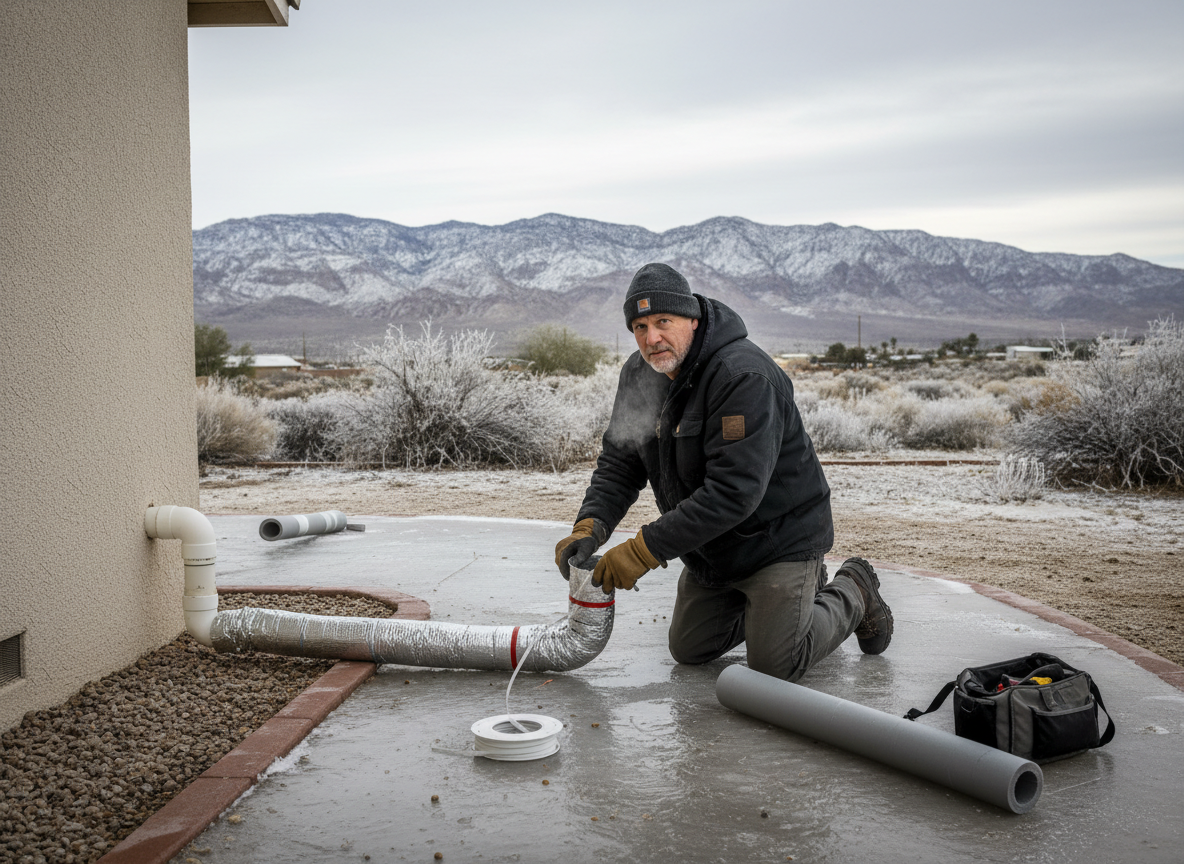
Preventing pipe bursts during rare cold snaps in Riverside County starts with insulating exposed pipes in crawl spaces and attics plus allowing a slow drip when overnight lows fall below 32°F, which occurs a handful of times each winter even in Whitewater's hot desert climate.
Why Cold Snaps Hit Desert Plumbing Hard
Whitewater sits in the high desert portion of Riverside County where daytime heat often exceeds 100°F yet winter nights can plunge 40 degrees. Many homes built before 1990 have copper or galvanized lines running through unconditioned crawl spaces and along north-facing stucco walls. These lines lose heat rapidly when wind blows across the valley floor toward Banning Pass. A single night at 28°F can expand water inside the pipe enough to split joints, especially where pipes touch concrete slabs that pull heat away. Palm Springs and Cabazon see similar patterns because the same elevation and exposure apply across the region.
Identifying Pipes Most at Risk
Focus first on supply lines feeding outdoor spigots and the main line entering the crawl space under older single-story homes along Dillon Road. Check the 40- to 60-gallon water heater closet if it lacks insulation on the incoming cold line. Second-story bathrooms in two-story homes near the 60735 Dillon Rd corridor often have vertical stacks against exterior walls with minimal R-value. Run your hand along accessible pipes on a 35°F night; any section that feels colder than room temperature needs attention before the next front moves through.
Practical Insulation Steps That Work Locally
Wrap vulnerable runs with 1/2-inch closed-cell foam sleeves rated for at least R-3. Secure with zip ties every 12 inches and seal seams with foil tape so wind cannot reach the pipe surface. In crawl spaces, add batts or rigid board between joists above the pipes rather than wrapping every line individually. Homeowners near Palm Springs often add heat tape on a thermostat set to 38°F on the main feed line; this draws minimal power yet keeps water moving on the rare nights the thermometer hits 25°F. Leave cabinet doors under sinks open during the cold spell so household air reaches the pipes.
Managing Flow and Monitoring Temperatures
When a freeze warning is issued, open the faucet farthest from the water meter to a pencil-lead stream. This keeps water moving at roughly 0.5 gallons per minute and prevents pressure buildup from expansion. Check the outdoor thermometer at the Whitewater Canyon weather station rather than relying on Palm Springs reports, because the 500-foot elevation difference can add 3–5 degrees of cold. If indoor temperature drops below 50°F for more than four hours, increase the trickle to a steady stream until the cold snap passes.
When Prevention Fails, Quick Response Limits Damage
A burst line can release 5–10 gallons per minute once pressure returns. Shut off the main valve at the meter immediately, then call for water damage mitigation to extract standing water before it reaches drywall or subfloor. Properties in Banning and Desert Hot Springs often see moisture travel under stucco because of the sloped lots; rapid removal prevents the secondary mold issues detailed in What Influences Water Damage Repair Costs In Whitewater. Keep the number for 24-hour service handy so extraction begins within the first hour rather than the next morning.